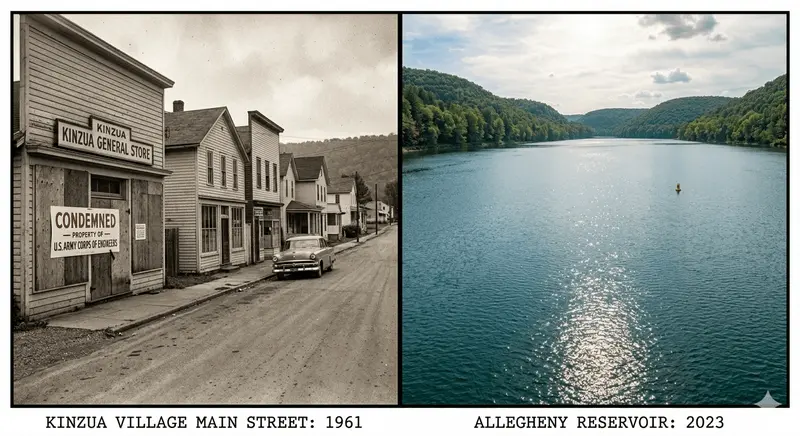
The peaceful, clear water of the Allegheny Reservoir—the same water we paddled in our recent guides—hides a dynamic and painful history. The creation of the Kinzua Dam in 1965 was sold as a vital engineering project to protect the downstream city of Pittsburgh from catastrophic flooding. The cost of that protection, however, was paid almost exclusively by the people of the High Plateau.
The project did more than control water; it broke one of the oldest treaties in United States history. In 1794, President George Washington signed the Treaty of Canandaigua, which promised the Seneca Nation that their lands along the Allegheny River—including the fertile valley of the Ohi:yo'—would remain theirs "forever." The construction of the dam forcibly broke that forever.
The End of Corydon and Kinzua Village
When the gates of the dam were closed, rising waters submerged nearly 10,000 acres of Seneca ancestral land, as well as the vibrant, riverside communities of Corydon and Kinzua Village. These were not just names on a map; they were established agricultural towns with post offices, churches, general stores, and generations of history built into the very grit and cobblestone banks we navigate today.
The federal government used eminent domain to seize the property. In Kinzua Village, located just miles from the dam, entire streets were condemned. The displacement was absolute. The government systematically burned or demolished every structure in the flood zone—homes, businesses, schools—ensuring that nothing remained of the life that had existed.
"Grit and Tears": The Moving of the Dead
Perhaps the most heartbreaking aspect of the displacement was the relocation of the cemeteries. In Corydon and other Seneca graveyards, the remains of hundreds of ancestors—some dating back to pre-Revolutionary times—were disinterred. This was not merely moving stones; it was a profound spiritual trauma for the Seneca people, who view connection to ancestral burial ground as a core component of sovereignty.
These remains were reburied on higher ground, often overlooking the very water that had erased their homes. The process was handled with little sensitivity, leaving a legacy of deep resentment and loss that persists among elders who remember the Ohi:yo' valley as it was.
Legal Battles and Sovereignty
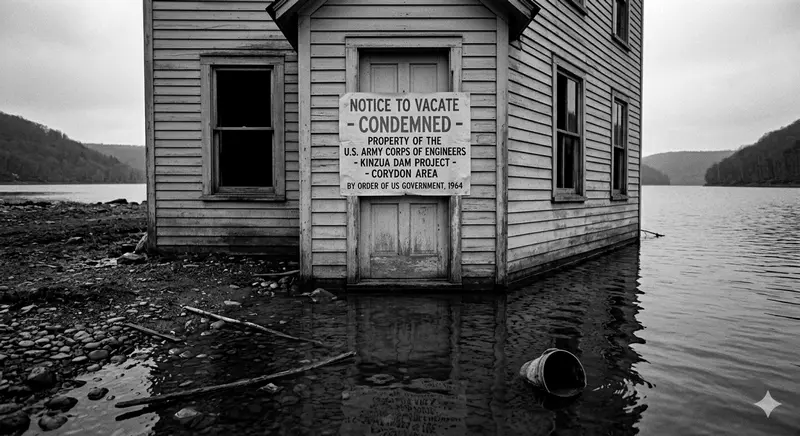
The Seneca Nation did not accept the displacement silently. They launched a fierce, historic legal campaign, fighting all the way to the U.S. Supreme Court. Led by prominent Seneca leaders like George Heron, they argued that the 1794 Treaty of Canandaigua prohibited the federal government from taking their land for the project.
The court, however, ruled against them, determining that Congress possessed the "plenary power" to break treaties for public works projects. This defeat was a seismic moment for Indigenous sovereignty in America, setting a precedent that treaty rights could be set aside when they conflicted with infrastructure development.
A Legacy Written in Water
Today, the Allegheny Reservoir is a hub for recreation, its origins often obscured by time and convenient silence. As we hike Tracy Ridge or boat past the empty bends where Kinzua Village once stood, we are interacting with a landscape defined by this erasure. The Kinzua Dam controlled the floodwaters of Pittsburgh, but it also controlled the history of the High Plateau, submerging a vibrant, multi-cultural legacy beneath a deep and silent pool.