In 1933, the Allegheny Plateau was a scarred landscape. Decades of aggressive logging and unchecked forest fires had left the region "the land that nobody wanted"—a decimated expanse of stumps and eroded hillsides. But during the height of the Great Depression, an experimental federal program arrived to stitch the forest back together.
They were the Civilian Conservation Corps (CCC), better known as "Roosevelt's Tree Army."
Camp Kinzua and the Battle for the Soil
For the young, often malnourished men from cities like Pittsburgh and Philadelphia, arriving at Camp Kinzua (S-80) or Camp Morrison was a shock to the system. Living in semi-military barracks, these men were paid $30 a month—$25 of which was sent directly home to their struggling families.
Their mission was monumental: reforest the plateau. They didn't just plant trees; they planted millions of them, specifically targeting the scorched slopes where topsoil was washing into the Allegheny River. If you walk through a stand of towering, perfectly straight Red Pines today, you aren't looking at a "natural" forest; you are looking at a living monument to the CCC.
The Architects of the Outdoors
While the trees are their most vast legacy, their most visible work is found in the "bones" of our parks. The CCC brought a specific aesthetic to the Allegheny National Forest, now known as "National Park Service Rustic."
This style dictated that all man-made structures should harmonize with the natural environment. This meant using local, hand-hewn timber and massive, "quarried-on-site" sandstone.
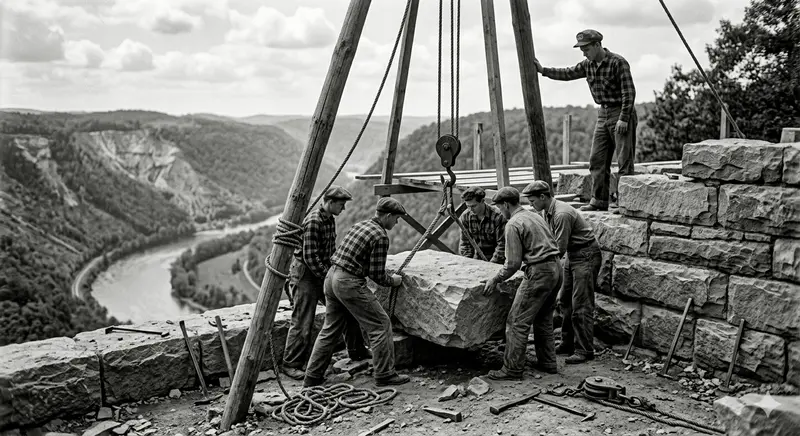
[Image: A CCC crew working on a stone pavilion at a Kinzua overlook]
How to Spot the CCC Signature
The craftsmanship of the Tree Army is so durable it still defines our outdoor experience 90 years later. You can spot their "fingerprints" at sites like the Tionesta Observation Tower or the stone shelters at Cook Forest:
-
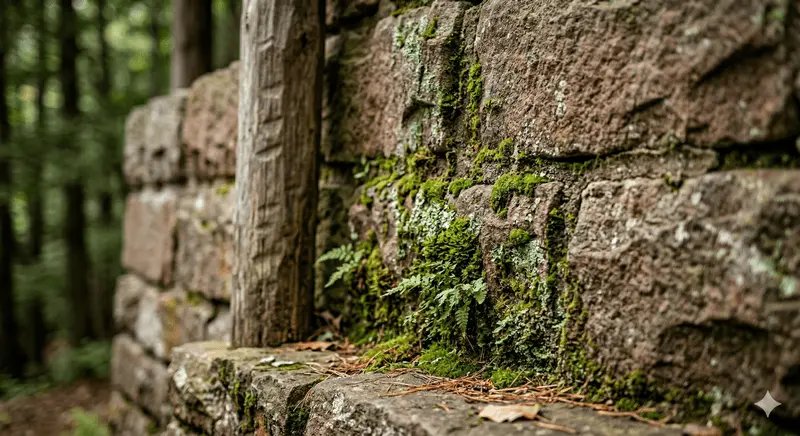
The "Batter" Wall: Look for stone walls that slightly tilt inward as they rise. This is a classic CCC technique for structural stability.
-
Hand-Adzed Logs: If you see a support beam that isn't perfectly smooth, but covered in small, rhythmic "chips," it was shaped by a young man using a hand-tool called an adze.
-
Massive Masonry: The CCC didn't use small bricks. They used colossal blocks of local sandstone, often so large they required dozens of men and pulleys to set in place.
The next time you sit in a stone pavilion at Jakes Rocks or hike a trail that seems perfectly integrated into the cliffside, remember the "boys" of the CCC. They didn't just save the soil; they built the very way we interact with the wild today.