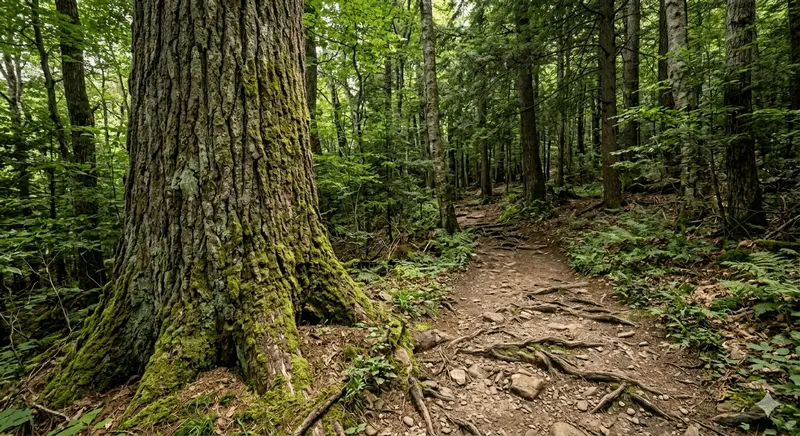
The Jakes Rocks trail system, just across the reservoir, is designed for movement and efficiency. The Tracy Ridge Recreation Area, by contrast, is designed for stillness. It is one of the largest continuous roadless areas on the High Plateau, and hiking here requires a trade-off: you will find none of the modern amenities or sustainable, machine-built grades of Jakes Rocks, but you will find a silence that is almost palpable.
The vast, 30-plus mile stacked-loop system offers a glimpse into what the Allegheny Plateau looked like before widespread industrial logging changed the landscape. Here, massive, ancient white pines still punctuate the dense canopy of beech and oak, their roots gripping deep into the grit and cobblestone soil that we have described throughout our regional guides.
The Long Drop to the Water
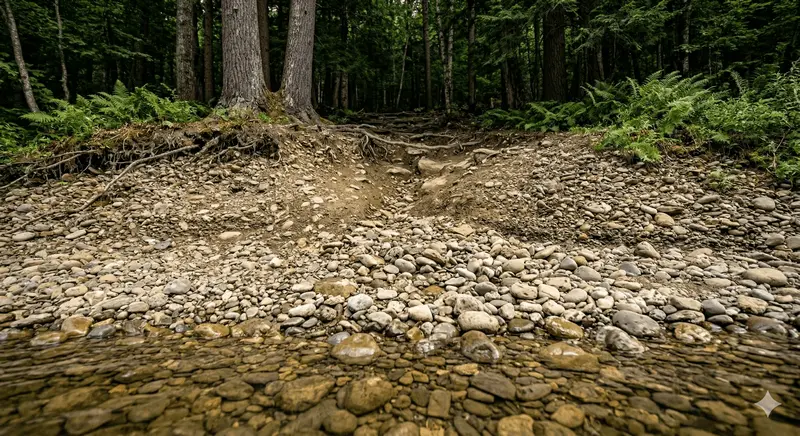
Most Tracy Ridge hikes begin on the ridgetop, where the trail is relatively flat as it winds through the plateau’s typical temperate forest. The real challenge, however, begins when you decide to take any of the loops down to the banks of the Allegheny Reservoir.
The slopes here are unforgiving. Unlike the switchbacks engineered for modern mountain biking, Tracy Ridge trails often plunge straight down the ancient, V-shaped hollows carved during the glacial period. These sections are rocky, root-choked, and, after one of our sudden "Allegheny Rains," exceptionally muddy. The effort to reach the water, however, is invariably worth it.
Wildlife and the "Forest Heartbeat"
Because of its isolation, Tracy Ridge is a refuge for the Plateau’s most iconic wildlife. It is the heart of black bear country, and it’s not uncommon to find clear, recent sign—from claw marks on a smooth American beech to fresh, berry-filled scat. This is also where you are most likely to spot a nesting pair of bald eagles, which rely on the steep, remote shoreline for privacy. The forest here has a deep, rhythmic "heartbeat" that requires quiet observation to hear.
Respecting the "Wild Side"
Hiking on Tracy Ridge is a fundamentally different experience than exploring other parts of the forest. The "stacked loop" design that makes it popular can also make navigation complex, especially when trails are buried in deep leaf litter or heavy lake-effect snow.
Essential Tracy Ridge Tips
While other guides might focus on gear and flow, Tracy Ridge demands preparation and respect for the environment.
-
True Off-Grid Navigation: Do not rely on cell service. It is non-existent. Carry a physical map and compass and know how to use them. The intersections can be confusing.
-
Manage Your Water: Unlike paddlers on the river or bikers near trailheads, you must carry all your water. Streams on the Plateau can dry up quickly, and filtering from the reservoir is not always ideal due to algae.
-
The Shoreline is Remote: If you hike to the water’s edge, remember that help is a long way off. Treat the reservoir shore as a wilderness zone.
-
Timing Your Return: The most difficult part of any Tracy Ridge hike is the last mile, as you climb back up from the reservoir to the ridgetop. Budget significantly more time for the return ascent.
Tracy Ridge remains the wild, beating heart of the High Plateau. It is not an area that is easily mastered, but it is one that deeply rewards those willing to trade convenience for a true sense of scale, solitude, and connection to the raw nature of the Allegheny wilderness.