The Allegheny High Plateau is a landscape shaped by water—from the deep Ohi:yo' (Allegheny River) to the vast reservoir we navigate. But as we have detailed in our environmental guides, this same geography, with its steep V-shaped valleys and grit-heavy soil that dries exceptionally fast, creates a paradox: a lush, temperate forest that can become explosive during dry spells.
Responsible stewardship of the Kinzua region requires a fundamental understanding of fire dynamics. A single, neglected campfire—especially in the non-permissive, primitive areas like Thompson's Island or Tracy Ridge—possesses the power to erase generations of forest growth and centuries of history.
The "Grit and Gravel" Rule: Front-Country Safety
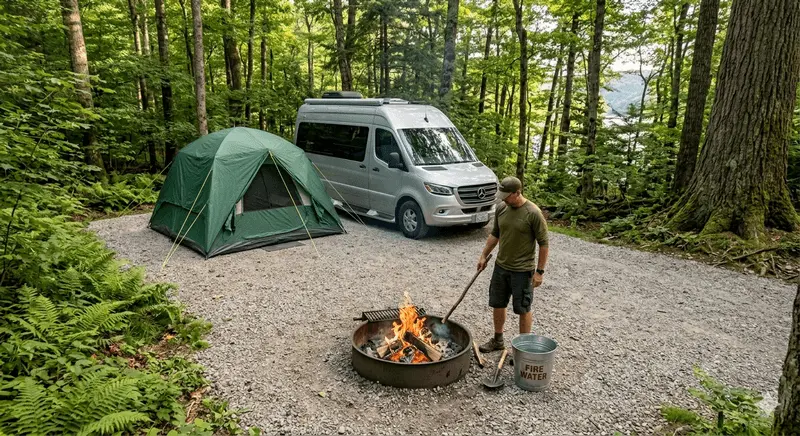
The safest way to enjoy a campfire on the High Plateau is within an established, USFS-managed campground, such as Dewdrop Campground. These sites are designed with fire prevention as a core tenet.
In these "front-country" environments, campfires are permitted only within the provided, heavy-gauge steel fire rings. These rings are positioned specifically on non-combustible surfaces—typically a wide, compacted gravel pad that we saw in our previous camping dispatches. Before building your fire, ensure the gravel pad surrounding the ring is clear of all debris (leaves, sticks, pine needles). This 10-foot "defensible space" prevents a stray ember from igniting the forest floor.
Fire Suppression is Mandatory
A fire is not "out" until it is cold-out. The proper method requires patience and a significant amount of water.
Drown it: Pour a massive amount of water (use your paddling dry bag or a large pot) directly into the fire ring.
Stir it: Use a shovel or a large stick (like the Sycamore roots we navigated on Thompson's Island) to stir the slurry, ensuring every ember is exposed.
Repeat: Drown it and stir it again. The goal is a cold, wet, soupy mixture. Do not simply bury it; this creates a subterranean oven that can retain heat for days and re-ignite after you leave.
The Non-Permissive Environment: Tracy Ridge and the Islands
The non-permissive, primitive areas of the High Plateau present the highest fire risk. As we emphasized in our Thompson’s Island guide, primitive camping requires specialized skills and zero-impact ethics. In these zones (Tracy Ridge, Crull’s, Thompson's Islands), the policy is clear: No Campfires.
Why the Islands Are "No Fire" Zones
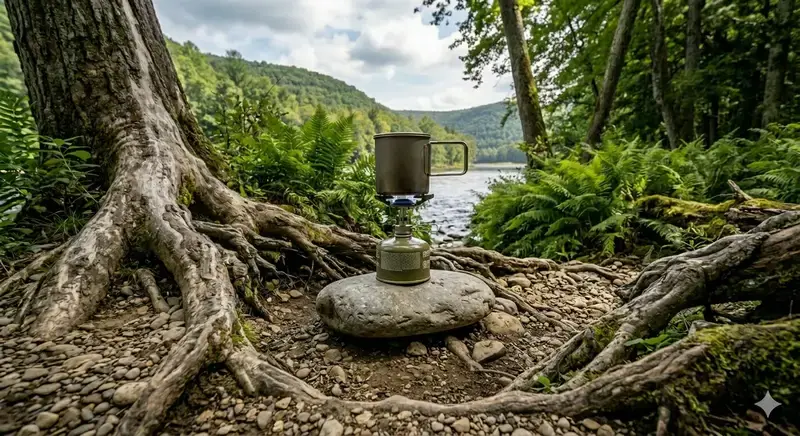
These islands, managed for wilderness characteristics, lack established fire rings and are composed of the sensitive, riparian geology (the smooth cobblestones and fine grit) we have detailed.
Root-Ignition: The dense Sycamore and Hemlock root systems that we used as bivy anchors on Thompson's Island are incredibly flammable and often interwoven. A "rock ring" fire built on the surface will transfer immense heat down through the roots. This creates a fire that burns underground, undetectable by surface observers, for hours or days before erupting into a major wildfire far from the origin.
Zero-Impact Requirement: Constructing "rock rings" is a direct violation of Leave No Trace principles. It damages the ecosystem and permanently scars the landscape.
When exploring these remote, non-permissive zones, self-reliance means using a compact, stable backpacking stove for all cooking. These stoves are efficient, leave zero trace, and eliminate the catastrophic risk of a root-ignition fire.
A wildfire on Tracy Ridge or Thompson's Island would not only erase the very solitude and old-growth characteristics (the ancient White Pines and Sycamores we have described), but would also destroy critical wildlife habitat (the bald eagles and black bears). Defending the Plateau means committing to this zero-impact, prevention-first identity.